Stanford University School of Medicine · Radiation Oncology

Islam Lab

An interdisciplinary group at the intersection of artificial intelligence, statistics, and cancer research — developing computational tools that support cancer detection, diagnostic refinement, and therapeutic decision-making.

Research

Learning the structure of high-dimensional biology

We develop deep-learning and statistical methods that turn high-dimensional biomedical measurements — genomics, proteomics, imaging, and clinical data — into interpretable, transferable representations, and translate them toward clinical practice and biological discovery.

01

Deep learning for omics data

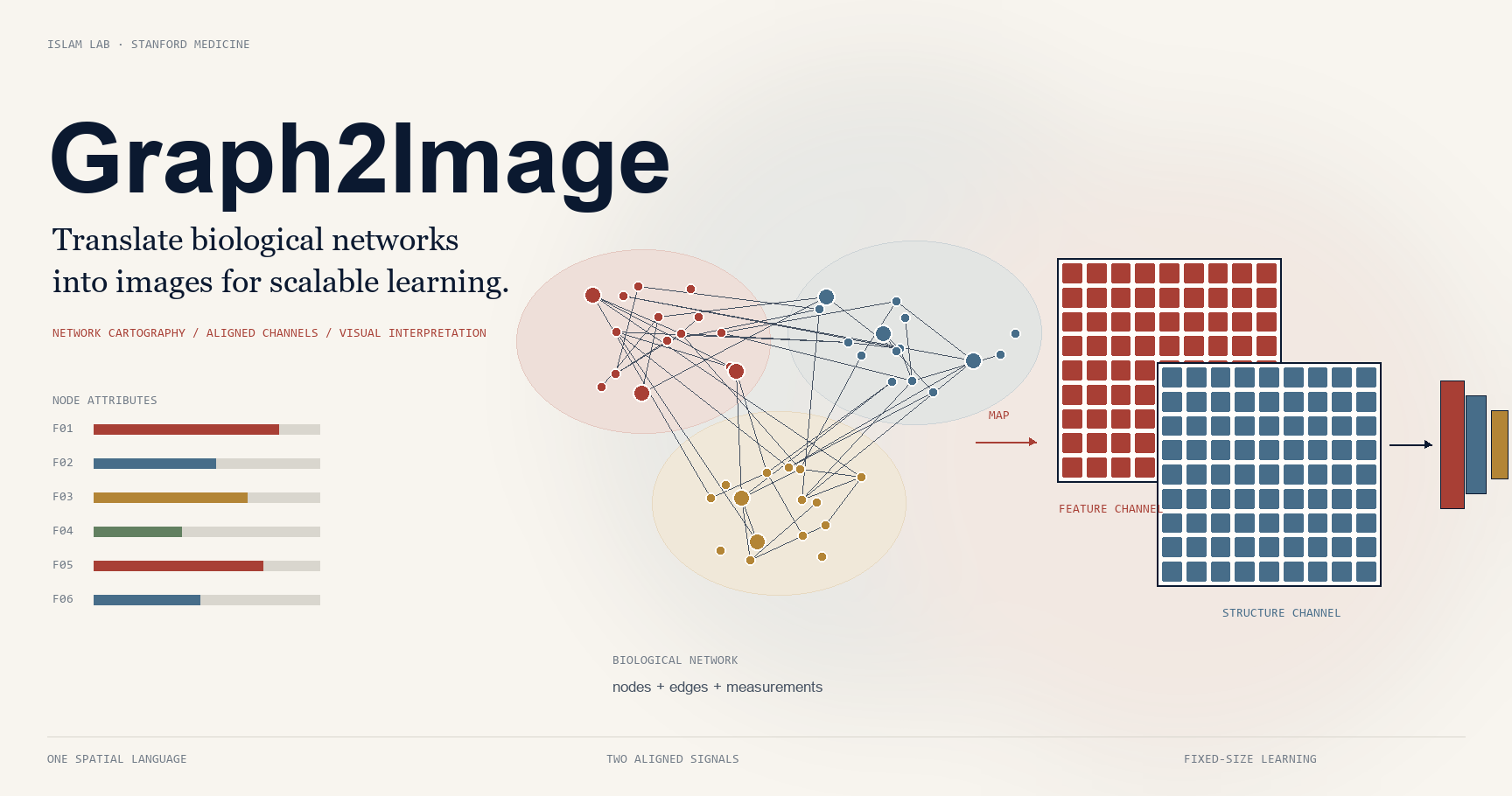
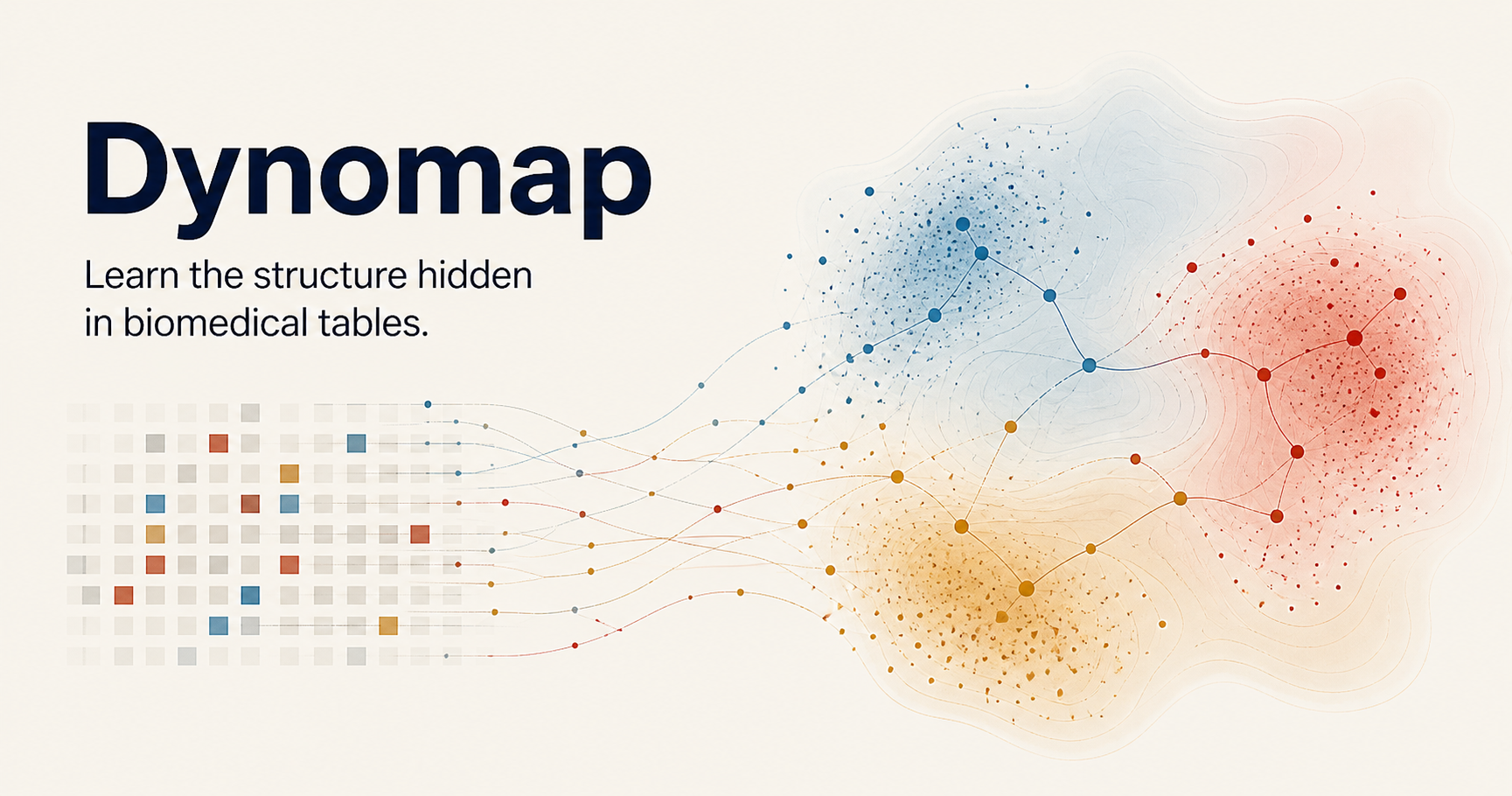
Tabular data hides the relationships between features. We reconfigure each sample into a spatially semantic 2D topographic map (TabMap) that keeps feature values as pixel intensities and encodes feature relationships as spatial distance — letting 2D convolutional networks extract association patterns while ranking features by importance.

Nat. Biomed. Eng. 2025
02

Deciphering the feature space

Most deep-learning applications are regressions, whose features lie on a complex high-dimensional continuum that resists visualization. Our manifold discovery and analysis (MDA) method learns the manifold topology tied to a network's outputs, preserving local geometry to reveal a model's appropriateness, generalizability, and adversarial robustness.

Nat. Commun. 2023
03

Multi-modal data analysis

In radiation oncology and medical physics, we integrate diverse data types — medical imaging, clinical records, genomic profiles, and treatment parameters — to uncover complex patterns across modalities that are invisible in any single one, improving diagnosis, prognosis, and therapeutic decision-making.

Related publications
Projects

Open research from the lab

Models, tools, and methods we develop and share. scVision is the first; more are on the way.

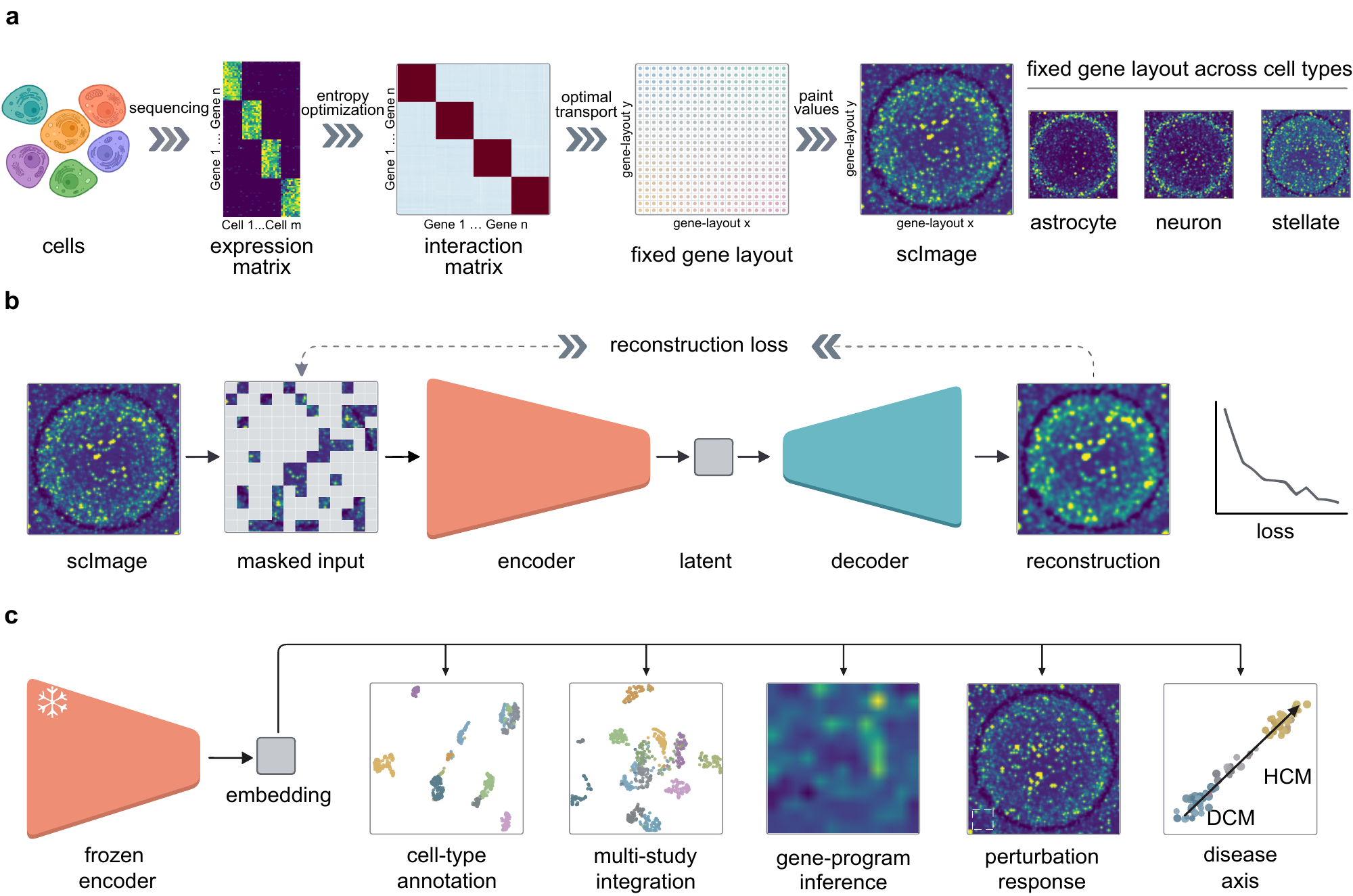
scVision overview: cells rendered as continuous images, a masked-autoencoder vision transformer, and the downstream tasks its frozen encoder supports.
Foundation model · Single-cell biology

scVision

A vision foundation model for single-cell biology. It renders each cell as a continuous image via optimal-transport gene cartography and learns one frozen encoder by masked-image pretraining on 72 million human cells — the most accurate zero-shot cell-type annotator on every held-out atlas we tested.

Explore scVision
2026 · PreprintVision transformer · Masked autoencoder
More projects from the lab are on the way.
Team

People

An interdisciplinary group spanning machine learning, statistics, engineering, and biology.

MI

Md Tauhidul Islam, PhD

Principal Investigator · Assistant Professor, Department of Radiation Oncology, Division of Medical Physics

Md Tauhidul Islam develops novel AI techniques for biomedical applications, with a focus on translating biomedical data-science research into benefits for clinical practice and biological investigation. His work applies large foundation models and neural networks to high-dimensional medical data — genomics, radiomics, proteomics, and images across modalities — to advance patient care. He earned his PhD at Texas A&M University and trained as a postdoctoral scholar at Stanford with Dr. Lei Xing.

SM

Sakib Mostafa, PhD

Postdoctoral Fellow

Machine learning, deep learning, and integrative omics. Builds AI-driven tools for multi-omics integration with applications in cancer diagnosis and precision medicine. Previously a postdoctoral associate at the National Research Council of Canada; PhD, University of Saskatchewan.

SS

Seraphina Shi, PhD

Postdoctoral Fellow

Develops robust, interpretable statistical machine-learning methods for complex biomedical data — with applications in early cancer diagnostics through cfDNA liquid biopsy, spatial transcriptomics, and imaging-based biomarker discovery. PhD in Biostatistics, UC Berkeley. Co-mentored with Dr. Mohammad Esfahani.

RY

Ridvan Yesiloglu

PhD Student

PhD student in Electrical Engineering, advised by Prof. Ehsan Adeli and Prof. Md Tauhidul Islam. Works on large-scale, clinically transformative brain models to advance our understanding of the human brain through AI. BS, Bilkent University; Fulbright Scholar.

TX

Tracy Xue

Assistant Clinical Research Coordinator

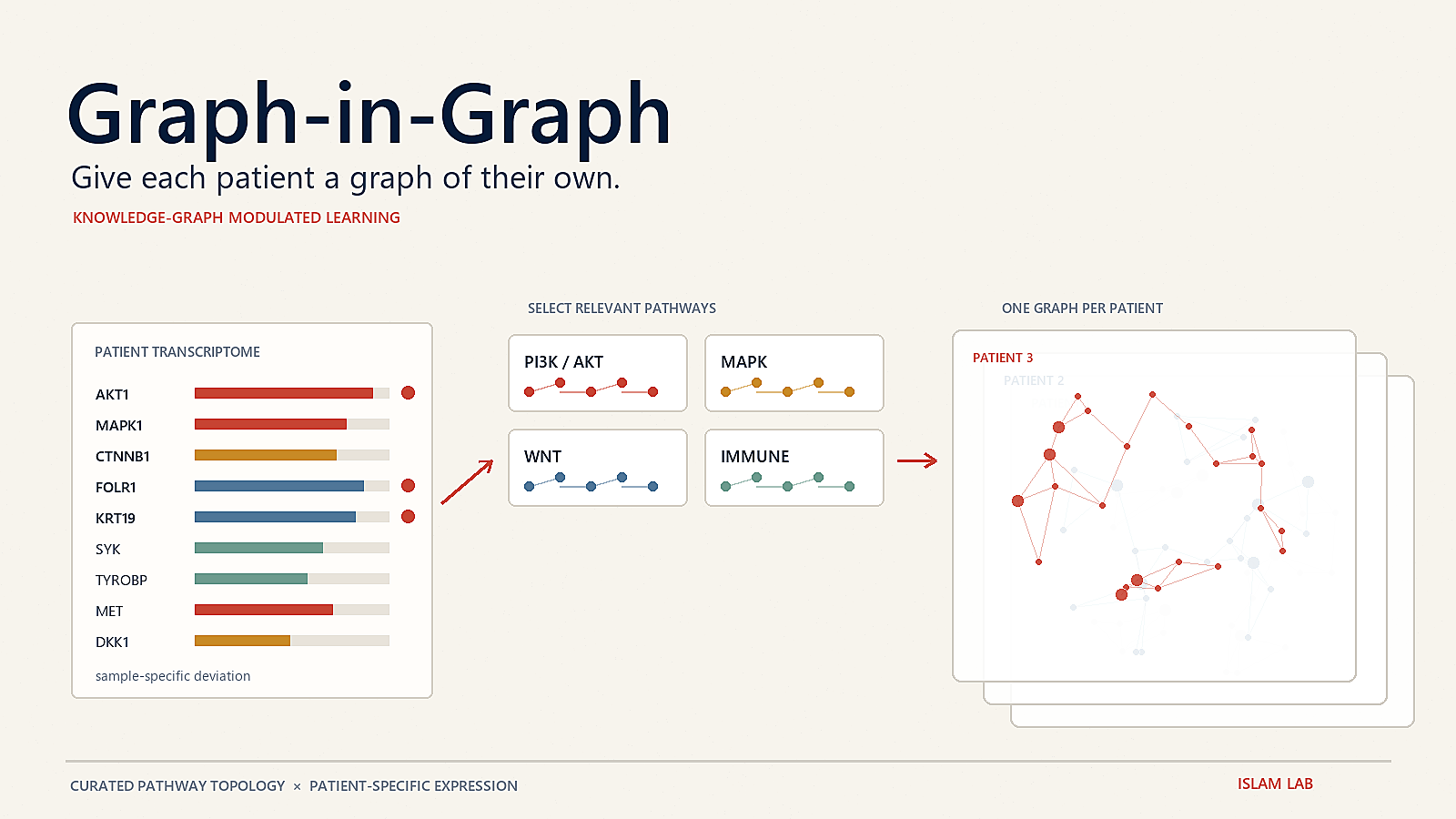
Applies graph neural networks that integrate biological-pathway structure with multi-omics cancer data to better understand the interactions driving tumor behavior. BS/MS in Bioengineering, UCLA, with prior research spanning neurodegeneration, nephrotoxicity modeling, and drug-screening platforms.

Publications

Selected publications

A selection of recent work. See Google Scholar for the complete list.

2024
Yan R., Islam M.T., Xing L. Deep representation learning of protein–protein interaction networks for enhanced pattern discovery. Science Advances 10(51), eadq4324 (2024). doi ↗
2025
Yan R., Islam M.T., Xing L. Interpretable discovery of patterns in tabular data via spatially semantic topographic maps. Nature Biomedical Engineering 9, 471–482 (2025). doi ↗
2023
Islam M.T., Zhou Z., Ren H. et al. Revealing hidden patterns in deep neural network feature space continuum via manifold learning. Nature Communications 14, 8506 (2023). doi ↗
2023
Liu J., Islam M.T., Sang S. et al. Biology-aware mutation-based deep learning for outcome prediction of cancer immunotherapy with immune checkpoint inhibitors. npj Precision Oncology 7, 117 (2023). doi ↗
2023
Islam M.T., Xing L. Cartography of genomic interactions enables deep analysis of single-cell expression data. Nature Communications 14, 679 (2023). doi ↗
2022
Islam M.T., Wang J.Y., Ren H. et al. Leveraging data-driven self-consistency for high-fidelity gene expression recovery. Nature Communications 13, 7142 (2022). doi ↗
News

Lab news

Mar 31, 2025

Sakib Mostafa joined the lab as a postdoctoral fellow. Welcome, Sakib!

Feb 3, 2025

Seraphina Shi joined the lab as a postdoctoral fellow. Welcome, Seraphina!

Contact

Visit & get in touch

We are located in the Stanford Research Park in Palo Alto.

Where to find us

Stanford Research Park · Miryan Hall 3145 Porter Drive, Wing A (2nd floor)
Palo Alto, CA 94304

Free visitor parking is available on-site at 3145 Porter Drive.

Get directions

Contact & join us

Md Tauhidul Islam, PhD
Principal Investigator · Room A202
tauhid@stanford.edu

We are looking for undergraduate and graduate students and postdocs to join the lab. If your expertise and interests match our projects, please email tauhid@stanford.edu.